

Listen, Read, Grow Worldwide: The new Rules of the digital Book Market





How would you summarize the current state of internationalization in the audiobook and e-book market? What are the most important trends?
Ailish Jung: The market for audiobooks and e-books has opened up massively on a global scale. Whereas the US, Western Europe, and parts of Asia used to dominate, demand is now growing worldwide—often in entirely new markets.
Jessica Barnfield: Markets are developing very differently internationally. The US and Northern Europe are mature subscription markets, while many other regions are price-sensitive, fragmented, or heavily promotion-driven.
Carlos Rojas: In Spanish-speaking countries, the audience for spoken word content has been growing significantly for years. The region is considered particularly dynamic, and digital formats are increasingly being used strategically.
JB: Growth today is driven less by larger catalogs and more by platform consolidation, subscription expansion, and discovery mechanisms. Competitive advantage comes from smart market prioritization and strong DSP relationships.
Mara Hartung: German-language publishers are thinking more confidently about internationalization. Many are now evaluating international audio rights themselves, which allows them to better exploit potential outside of traditional licensing models.
Theresa Soltau: Distribution is no longer a bottleneck today. The key question is: How do we create visibility? Value-added distribution means actively translating content into demand rather than just providing it.
In which international markets do you currently see the greatest growth opportunities for audiobooks, audio dramas, and e-books?
AJ: We see great momentum in India, Southeast Asia, Spanish-speaking countries, and Brazil. In Europe, Poland, the Baltic states, and the Balkans are growing particularly fast, often driven by agile local publishers and mobile-first users.
MH: In the e-book sector, international markets remain stable. Growth is primarily driven by the internationalization of existing programs, rather than by new regions.
CR: The audio segment continues to be highly dynamic, especially among young target groups. Regions such as Latin America have a wide reach but lower purchasing power, which is why we are working on market development there with co-productions. The Spanish-speaking markets offer great opportunities: the range of audiobooks is still limited, which creates scope for growth. In addition, print-on-demand enables reach without logistics costs, for example to the 60 million Spanish-speaking people in the US.
JB: The largest growth markets are in Asia, particularly India and China. Regions in North Africa and the Middle East (MENA) are also growing thanks to affordable data packages and local-language content. In Europe, Poland and France stand out as particularly dynamic audio markets.
What particular characteristics and challenges do you encounter in the various regions when distributing digital titles?
AJ: Smartphone usage and price sensitivity dominate many Asian markets. Shorter formats, series, and content in local languages work particularly well there.
MH: Localization goes far beyond translation. Dialects, cultural codes, and genre conventions vary greatly. What works globally still needs local sensitivity.
CR: Listening habits differ significantly. In many Spanish-speaking countries, traffic and long commutes create numerous audio moments. At the same time, a globally distributed audience is waiting for Spanish-language digital content.
JB: Some of the biggest challenges include payment methods, price acceptance, language and script complexity, and fragmented platform landscapes.
Welche strategischen Anpassungen sind nötig, um medienübergreifend in verschiedenen Ländern erfolgreich zu sein?
AJ: International distribution works best when publishers think regionally and scale globally. Prices, platforms, formats, and marketing must be adapted to local customs.
TS: Subscription markets require continuous output, while single-purchase markets require precise pricing. Successful localization includes covers, metadata, titles, and descriptions. Local partnerships are essential. International rights only add value when local expertise is taken into account.
CR: The Spanish-speaking world continues to struggle with regional availability gaps, which can be offset digitally. In the audio format, there is also the question of Spanish or Latin American voice talent, depending on the target audience and content.
JB: In mature markets, optimization for dominant DSPs and algorithmic visibility are important. In emerging markets, flexible pricing and strong local players are crucial. Multi-platform strategies are becoming increasingly important
Which marketing measures and channels have proven particularly successful in an internationalized market?
MH: Globally, TikTok, Instagram, and YouTube are key marketing levers and often more effective than traditional advertising.
TS: In the audio segment, playlists, recommendations, and editorial placements are crucial. The most successful approach is a combination of scalable global strategies and culturally appropriate localization.
JB: International marketing today is platform-native and data-driven. We rely on DSP campaigns, pre-orders, metadata optimization, influencer collaborations, and performance analyses to ensure that measures generate sustainable use.


How is international demand developing for different formats such as e-books, audiobooks, and audio dramas?
MH: E-books remain a stable foundation. In many countries, audiobooks are the entry point into the audio market. In the US and UK, hybrid, dramatized productions with multiple narrators or additional sound design are emerging.
TS: Platforms such as Storytel and BookBeat are investing more heavily in originals and serial formats – mainly in markets with high market penetration. Emerging markets almost always start with classic readings.
JB: Audiobooks are growing faster globally than e-books. Audio increasingly includes audio dramas and episodic fiction. India is a pioneer in this area, while in Europe audiobooks are being integrated into broader subscription ecosystems.
What innovations are particularly relevant for the future of the market? How can publishers and service providers benefit from the change?
AJ: Publishers benefit when they use local content, optimized metadata, and new formats such as serials and cross-media bundles. This strengthens loyalty and creates new revenue models.
TS: Artificial intelligence (AI) is already changing translation, localization, metadata, marketing, and production—and could enable personalized content on demand in the future. This makes strategic curation increasingly relevant.
CR: AI can help expand audio catalogs in emerging markets, but fair models for rights and monetization are needed. The expansion of Spanish-language catalogs without exclusive restrictions remains central.
JB: The big opportunity for publishers lies in building intellectual property that moves fluidly between text, audio, and screen. Formats should be treated as interwoven creative ecosystems rather than standalone products. Building on this, pricing structures are needed that will continue to benefit authors in the future.
What specific recommendations do you give to publishers who want to grow internationally?
AJ: Quite simply: Talk to us—we can help!
MH: Publishers should secure international rights—especially audio rights—as early and comprehensively as possible, approach internationalization strategically rather than opportunistically, and incorporate local expertise. Markets should be consciously prioritized and appropriate content selected. In addition, it is worthwhile to use AI as an efficiency and scaling tool. Those who combine rights, platform mechanics, and demand development will create long-term strategic options for themselves.
CR: At Zebralution, we generally advocate the use of professional narrators—not only because we firmly believe in them, but also because market data shows that listeners respond better to them. We advise publishers considering the use of AI voices to make it dependent on the quantity: when it comes to converting the entire catalog into audio quickly and cost-effectively, AI can be a viable option. However, if the aim is to produce a selection of the best titles to test the segment, it is definitely worth investing in the work of professional producers and actors.
JB: International expansion should be a strategic rollout. Publishers who understand local platform dynamics, pricing realities, and metadata standards—and choose partners who are both operationally reliable and strategically competent—are successful. Long-term relationships beat short-term placements.
Thank you very much for the exchange!
Whether eBooks or audiobooks – digital formats have long been established globally. Our graphics provide a compact overview of the most important trends and show how differently digital formats are used around the world.
Whether eBooks or audiobooks – digital formats have long been established globally. Our graphics provide a compact overview of the most important trends and show how differently digital formats are used around the world.
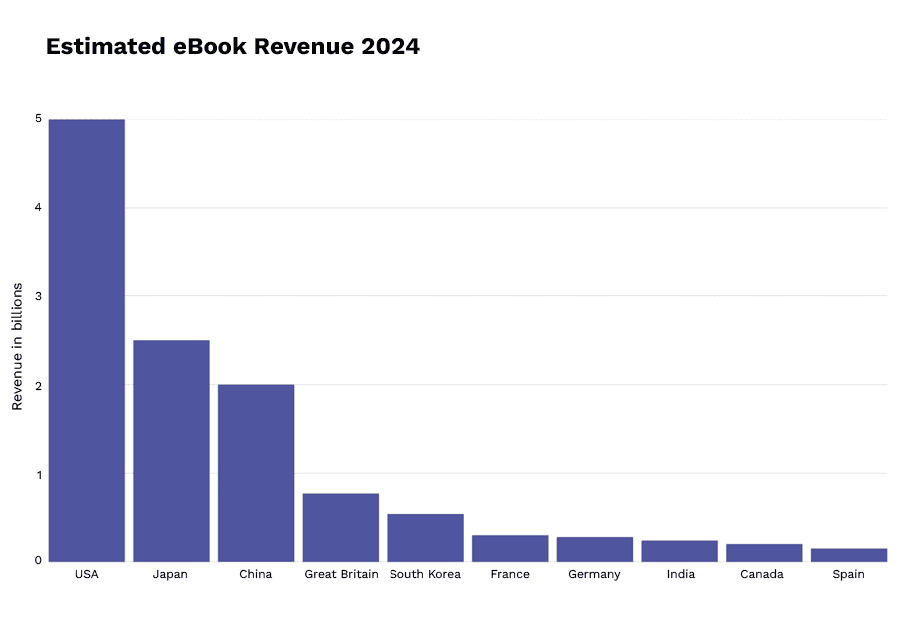
Top 10 eBook markets
The graphic shows the ten countries that lead the global e-book market. It is particularly clear how strongly the English-speaking world shapes the global e-book market: the US alone generated sales of around USD 5.3 billion in 2024. This is followed closely by important Asian markets. Europe is somewhat smaller in comparison, but remains a relevant player thanks to its diversity and stable readership. The data clearly shows that digital reading is firmly established worldwide – with regional differences in dynamics.
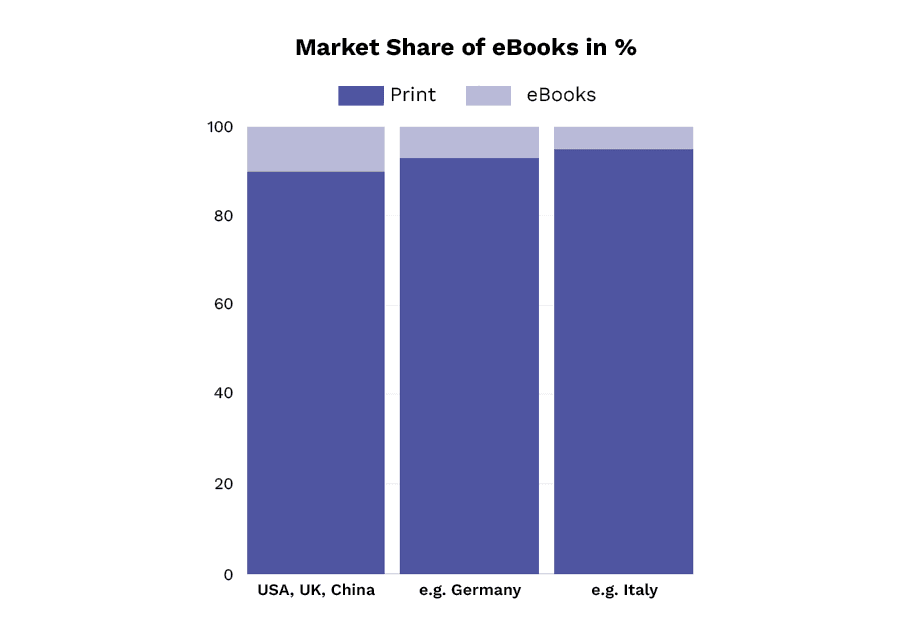
books vs. eBooks
Even though print continues to dominate the overall market, the share of e-book readers is growing steadily worldwide. The US, the UK, and China are far ahead in this respect, with around 10%. Germany is solidly in the middle of the pack.
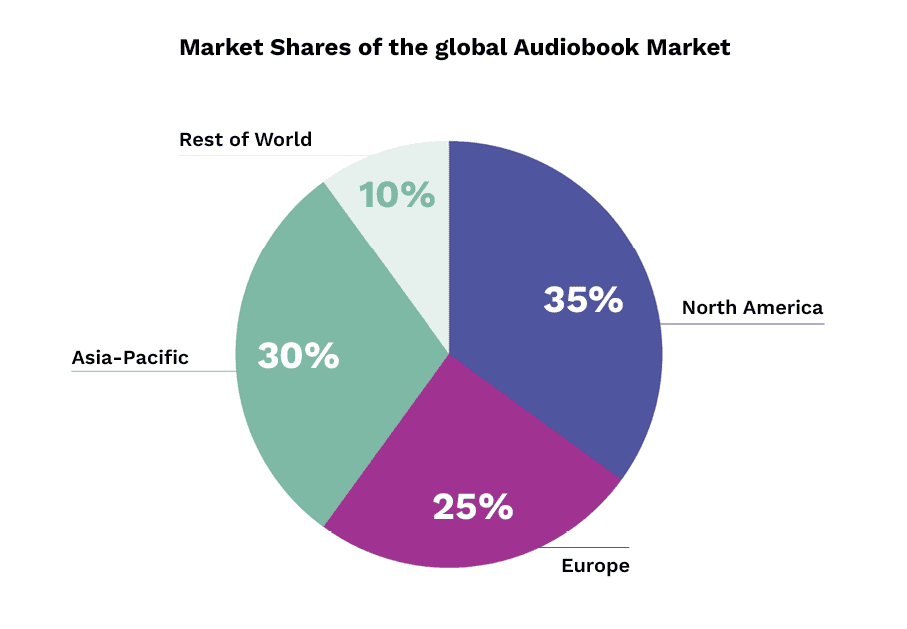
Audiobook markets worldwide
The international distribution of audiobook usage is similar to that of the e-book market: the strongest audience is found in English-speaking countries, followed by the growing Asian markets. Audiobooks are thus increasingly becoming a global entertainment format that is gaining in importance in many countries.
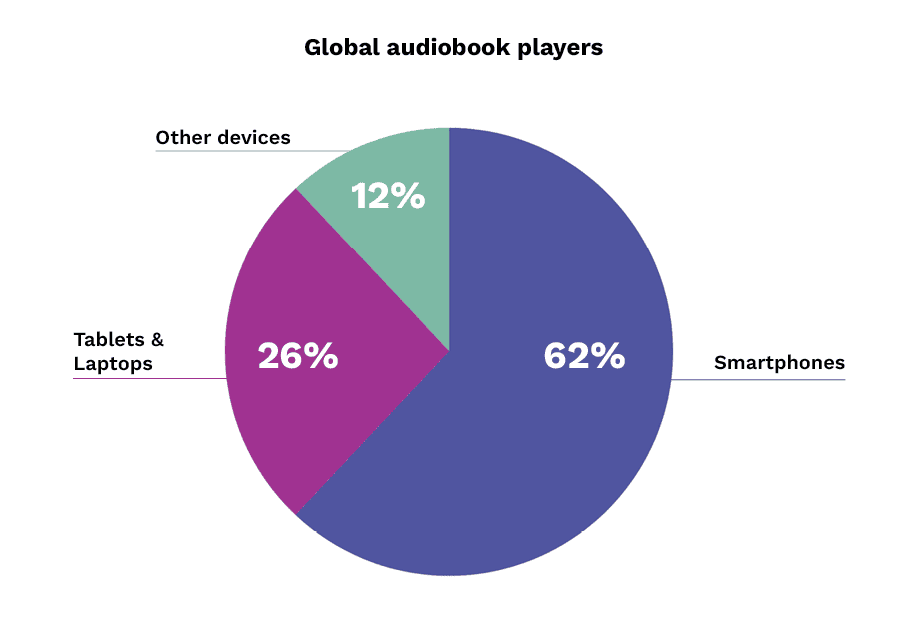
Audiobook playback devices
Smartphones are the most important device for listening to audiobooks worldwide. Tablets and laptops are close behind. Other devices such as smart speakers, wearables, and in-car systems currently play a smaller role.
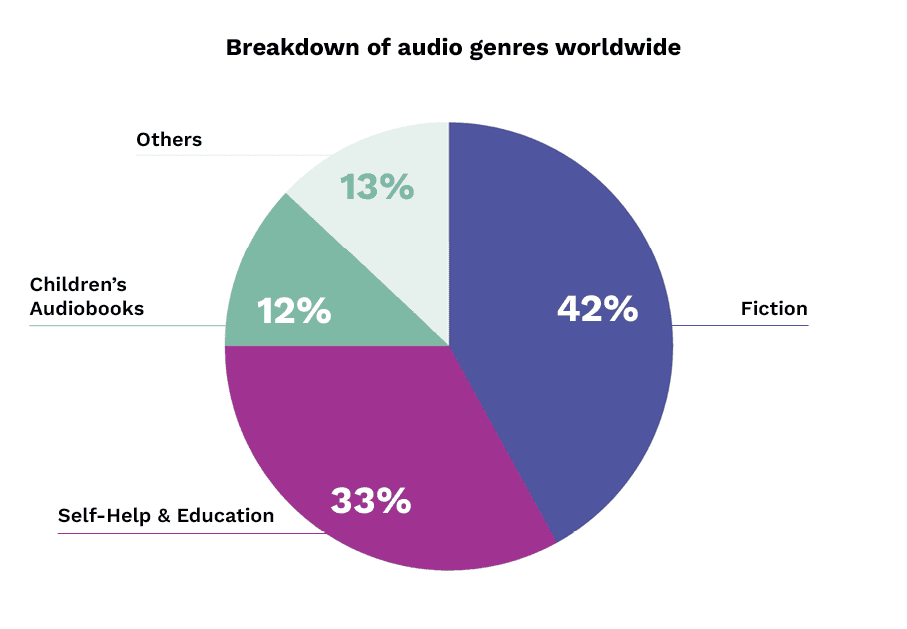
Audiobook genres
Fiction is clearly the most popular audio genre worldwide and attracts the largest audience. It is followed by self-help, educational, and children's audiobooks. The genre distribution shows that listening habits may differ internationally, but certain content works particularly well across country and language boundaries.

Data-driven publishing – opportunities for publishers
Publishing is undergoing radical change – once again, or as always? Digitization, the streaming boom in the audiobook business, and changing reading and listening habits are leading to rapidly growing competition – and new opportunities. With increasing digitization, the wealth of data that publishers can use for targeted, fact-based decisions is also growing. So: welcome to data-driven publishing (DDP)!
Publishing is undergoing radical change – once again, or as always? Digitization, the streaming boom in the audiobook business, and changing reading and listening habits are leading to rapidly growing competition – and new opportunities. With increasing digitization, the wealth of data that publishers can use for targeted, fact-based decisions is also growing. So: welcome to data-driven publishing (DDP)!
DDP is based on the "evidence first" approach, according to which good decisions are based on data, not just gut feeling. Data-supported forecasts and models supplement personal experience with valuable and irrefutable facts. DDP is understood as an iterative process: data is collected, analyzed, influences decisions, which in turn lead to new data.
The following section looks at examples that show how DDP can be used in the various phases of a product lifecycle: Which data is valuable, how can it be used efficiently, and which tools and methods have proven themselves?
Material and concept development
The possibilities for DDP begin at the very start of the lifecycle: even before a manuscript is written, publishers can use data to assess the chances of success for new material, topics, and genres and identify trends at an early stage. With the help of tools such as Google Trends, Bookstat, or industry-specific analysis platforms such as K-Lytics, it is possible to identify current trends and genres that are currently in high demand. In addition, community listening—the targeted evaluation of reader communities on platforms such as Goodreads or StoryGraph—provides feedback on topics and sentiments that traditional market research often misses.
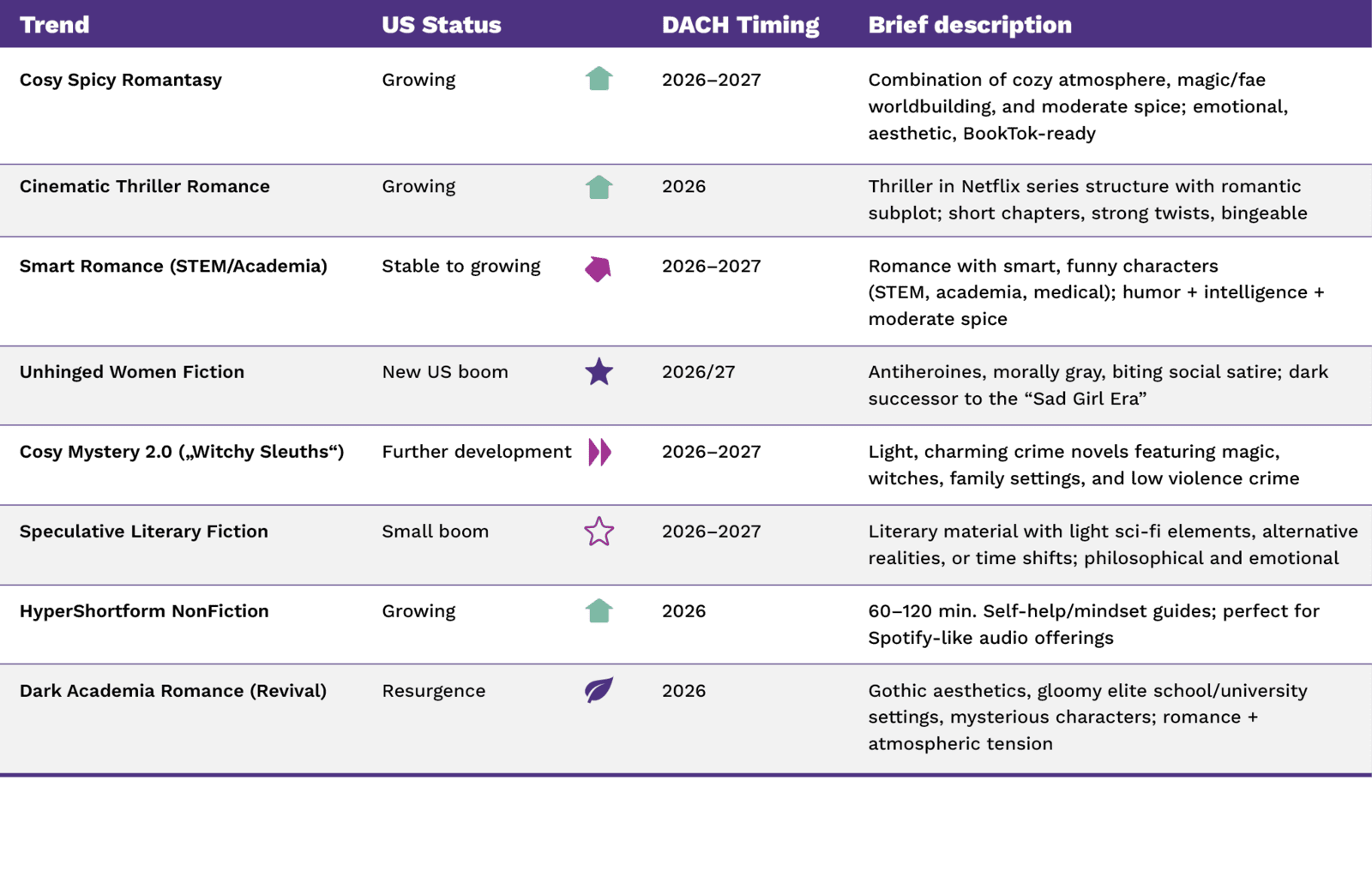
In general, it can be helpful to regularly look abroad: if an analysis shows that cozy crime is booming in the UK or the US, this can serve as inspiration for your own program. Data analyses suggest that key trends take between 12 and 18 months to spill over from the US market to the DACH market. Due to the more complex production conditions, the time lag is generally slightly longer in the audiobook sector than in the e-book sector.
Based on current trends in the US market, it can be assumed that the following genre trends will gain relevance in the DACH market this year and next:
In addition to deciding which titles to purchase and translate, program planners must also decide which in-house authors should be commissioned to write a new title. When deciding which author or series is suitable for a title, the figures for previous titles are logically helpful. One starting point for separating the wheat from the chaff is the question of whether an author or series has achieved brand status. For many successful authors and series, sales data reveals a "brandification" process that can be measured by three aspects:
- Sales in the first few months after release are higher for follow-up titles than for previous titles
- In addition, new titles typically show uplift effects for the previous titles
The average retention rate (RR) is high – i.e., the proportion of readers/listeners who read part n and part n+1 of a series. With RR values of 60–70%, we can speak of very good series loyalty, with >70% of a strong brand (rarely outside audiobooks), and with RR values >80% of a fan franchise (especially common in genres such as fantasy, romance, cozy crime, etc.)
In-house brands are stable sources of revenue because they are based on a close bond with readers. Here, too, the trick is to identify these brands and their respective strengths and not just rely on your own feelings.
Metadata optimization: The path to visibility
An important component of DDP is selecting the right metadata, because metadata ultimately influences the discoverability of titles and has an enormous impact on the decision to buy or not buy a book. There are great opportunities in the areas of subject groups and keywords on the one hand, and additional texts, author biographies, and subtitles on the other.
Tools such as Publisher Rocket or Amazon KDP's keyword tools help to find relevant search terms and categories. This selection should be based on specific demand data, because keywords that are not searched for do not contribute to discoverability.
Correct subject group information and the right subject group depth ensure that titles are classified correctly in terms of content on the most important platforms. Since each platform is based on its own category tree, comparisons between the original metadata and the shop categorizations are important sources of data here!
There are great opportunities in the area of additional texts, as publishers have a lot of creative freedom here. While "classic" additional texts focus primarily on providing an adequate summary of the title in question – often ending with a cliffhanger – "modern" variants of additional texts are characterized by the variable inclusion of different elements: quotes, reviews, summaries, emotional appeals. This is where DDP comes into play, because different shops have different target groups. DDP here means choosing the additional text variant that best suits the respective shop target group. This can be done based on gut feeling, but qualitative and quantitative data analysis works even better.
Central to the correct conception of metadata is the fact that more and more people are using AI models to find titles. While "classic" search queries – directed at Google or the various search engines of sales platforms – include staccato-like keyword combinations such as "tax return guide" or "e-book gay romance," an example of AI-supported search would be more of a question/request in the form of "Recommend me a book about toxic relationships in friendships." Many metadata sets are not prepared for this. Trope information such as "enemies to lovers" or "Viking fantasy" directly as a genre assignment or as a keyword helps AI locate the corresponding titles in the right "theme space." Information such as "expert in resilience research" in the author's biography contributes enormously to the categorization of titles by AI. If this categorization fails, a title disappears into thin air.

Pricing strategy
It is one of the crucial questions in digital publishing: What is the right price for my product? At the time of publication, but also after 12, 24, or 36 months? There is no single answer to this question, but DDP helps to find the best possible solution. Guidance is provided by:
- the prices of comparable competitor titles
the characteristics of the product: length, genre, target audience
the "brand" status: how well known are the author and/or series?
Before finalizing a price, potential demand curves can be modeled based on known historical data. There are now well-supported assumptions about genre-specific price elasticity—i.e., how sales respond to a price change—that can be used in demand modeling. If these assumptions are supplemented by your own data, generated through targeted price promotions, you can explore which price point in which genre/for which target group achieves the best balance between sales and revenue.
Marketing & promotion: Every campaign counts!
Every type of campaign – price campaign, sales campaign, brand campaign – offers a wealth of data that can contribute significantly to understanding the business. Of course, this requires the complete collection of the data chain, starting with the campaign launch and ending with the final event, e.g., the purchase of a title.
Example: A publisher launches a new e-book with three different Instagram ads: one focusing on the cover, one focusing on a reader's opinion, and one focusing on an emotional quote. After a week, the ads with the quote have generated 47% more clicks and twice as many purchases as the other variants. Logically, this provides important insights into how future campaigns should be organized. But the implications of this campaign are greater: as mentioned above, a quote can be an important element of the "additional text" metadata block. Or to think even further ahead: wouldn't a quote be a good fit for the book cover?
Long term: performance monitoring & long-tail optimization
At any given time, there are ten titles within a publishing house that are selling best at that moment and then appear in one of the beloved top ten lists. However, looking at absolute sales or turnover figures is rarely helpful. A much more interesting question is whether a title is a poor or good performer, i.e., whether it is performing below or above its actual potential. The potential of a title can be defined, for example, on the basis of the first six months after release. If a title actually performs below expectations, i.e., fails to reach its potential, there can be many reasons for this: popular competing titles, mediocre reviews, low awareness of the author(s), poor metadata quality, etc. Not all titles in a backlist have a marketing budget available, which makes it all the more important to identify those titles that have potential for improvement.
One way to identify titles with potential for improvement is based on a kind of "title-internal" prediction model. Statistical analyses show a very high correlation between sales figures in the first six months after release and later months:
- Titles with a strong start often remain strong
Titles with a weak start rarely catch up
The following two graphs show the monthly (gray) and cumulative (blue) sales development of two titles, with the cumulative sales of the first title in the upper range of the expected yellow sales corridor, while the second title is stuck in the lower range of expectations.
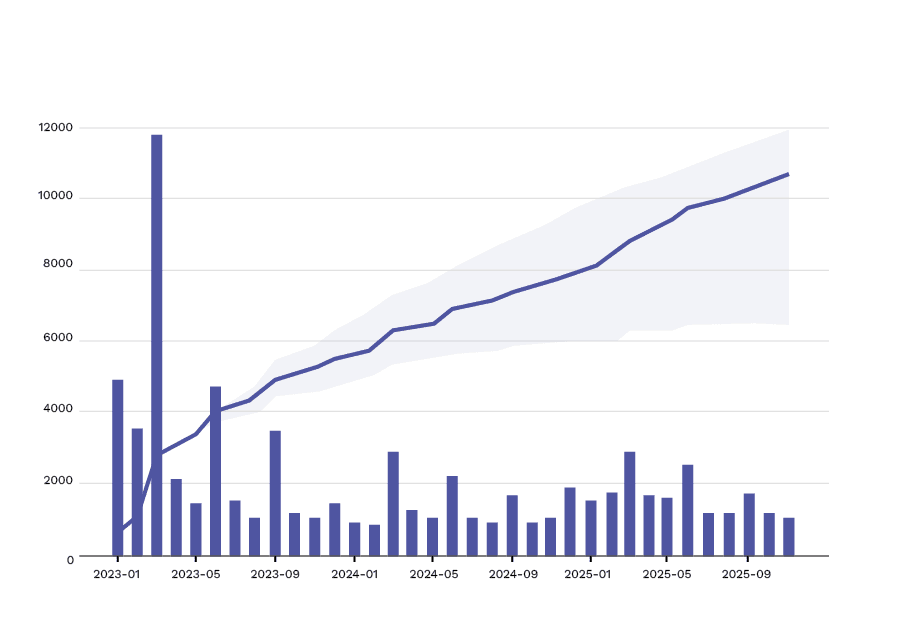
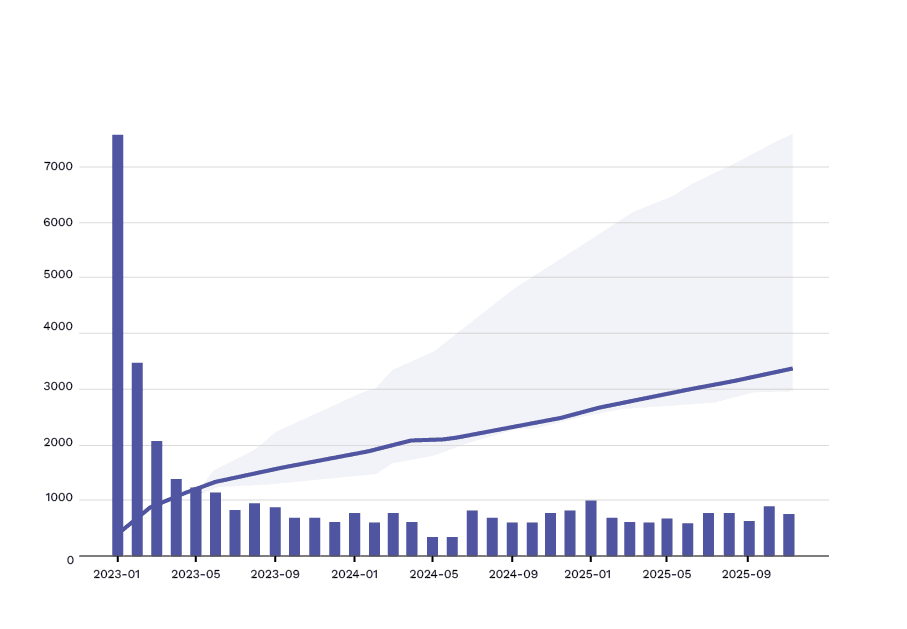
The second title is therefore an underperformer in terms of its own initial sales level, but supporting marketing measures are likely to be worthwhile in view of the early sales.
Here, a marketing formula can be developed that assesses and classifies the entire backlist in terms of marketing potential. This allows marketing budgets to be allocated where the expected return on investment is highest – based on data, not subjective assumptions.
Content development and user feedback: Listen, learn, adapt
Unlike in the past, readers and listeners are no longer a mysterious black box, as they frequently and prominently express their opinions. Readers and listeners leave reviews, star ratings, and comments on sales or social media platforms, inevitably exerting a massive influence on purchasing decisions in an industry where reviews and ratings are relevant to the vast majority of buyers. In doing so, they generate a large pool of data that can be used for future projects.
DDP helps to understand the influence of these factors and make the right decisions based on them. Of course, the content of a book cannot be revised retrospectively on the basis of negative reviews, but these should be part of the decision as to whether and to what extent a book is accompanied by marketing measures or not.
Nowadays, feedback from beta readers is easily accessible. Here, feedback is specifically solicited prior to publication and systematically evaluated. A/B testing with tools such as PickFu allows covers, titles, and blurbs to be tested for their effectiveness in a very short time. This makes it clear even before launch which variants are most popular with the audience.
Market- and platform-specific strategies
The international distribution of products creates additional pressure to make decisions. International markets differ significantly in terms of price structure, target group demographics, and dominant reading trends. Since this also applies to distribution platforms, a data-driven approach is helpful here. On the one hand, it answers the question of the right price for a product for each platform/market combination and, on the other hand, it helps to identify sales potential that can be leveraged through pricing or other marketing campaigns. Here is an example:
The following data for a medium-sized audiobook publisher shows the sales price level in Germany, Austria, and Switzerland for the "download" business model:
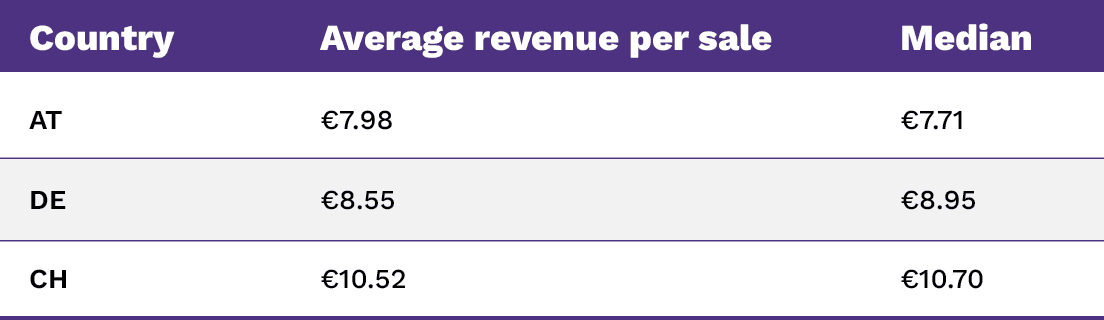
Austria is thus significantly below the German level (approx. -6.7%). The median – i.e., the value that divides all sales prices into two equal groups – is even €1.24 below the median in Germany (-13.9%). This means that 50% of sales in Austria are below €7.71. Normally, however, AT should be on par with or slightly above DE because AT and DE have similar purchasing power (with slight advantages for AT).
As expected, Switzerland is above the German price level. However, the price difference of 23% is slightly below the usual Swiss surcharge (often 25–35%). A detailed analysis shows that CH prices for Google and Tolino in particular are only just under 9% above DE prices and are therefore actually too low for the Swiss market.
A more detailed title-based analysis shows that 55% of the catalog either has an AT price that is less than 90% of the DE price or a CH price that is less than 115% of the DE price. In this case, it is very likely that more money could be earned quickly by adjusting prices.
This type of analysis can also be applied to subsets of catalogs (e.g., all titles by an author, all titles in a series), so that decisions can be made on a case-by-case basis as to whether prices should be adjusted or not. It is helpful to first adjust prices for those platforms (where price fixing does not apply) that provide data on conversion rates, as these provide important insights into market-specific price elasticity.
The following overview supports flexible international pricing based on the price for the German market and follows approximately the following calculation rules:
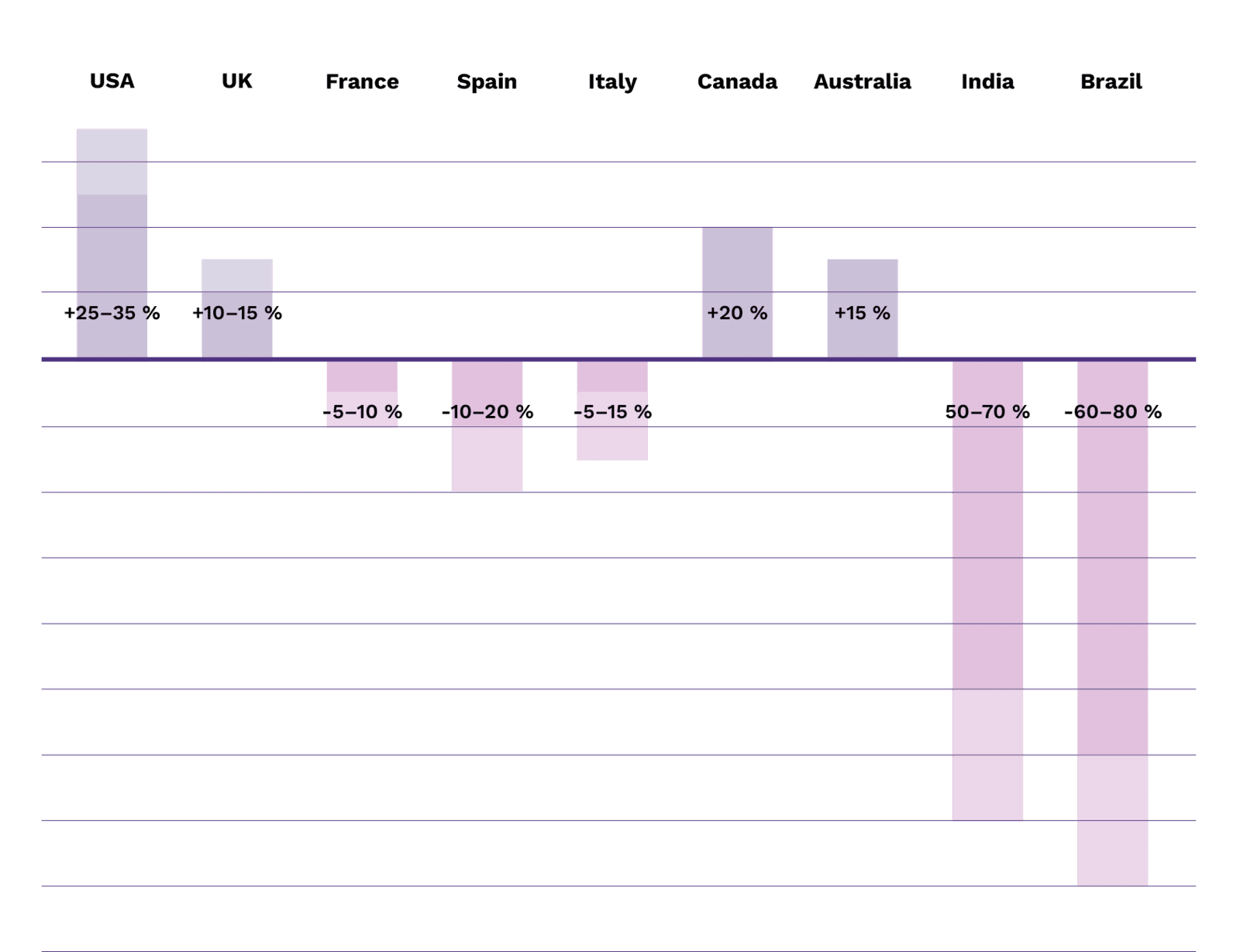
These rules of thumb are particularly effective and successful when the starting price for the German market is already based on the characteristics of the product (genre, target audience, length/duration, brand status of the series/author). Since each platform has its own successful price segments, market-specific prices should be expanded in a second step to market- and platform-specific prices based on data.
Market- and platform-specific data is also key to the success of campaigns that go beyond pricing strategies. Here is another example: A publisher wants to promote a new series of young adult books (audiobooks) using Facebook ads. The ads contain a link to the first title in the series on a streaming platform. This raises the question: Which platform should the link refer to? Since not all platforms provide demographic data, the "young adult book affinity" can only be estimated at best, based on the sales or streaming shares of titles in the "children's and young adult books" genres. For selected streaming providers in the German-speaking market, for example, this results in the following:
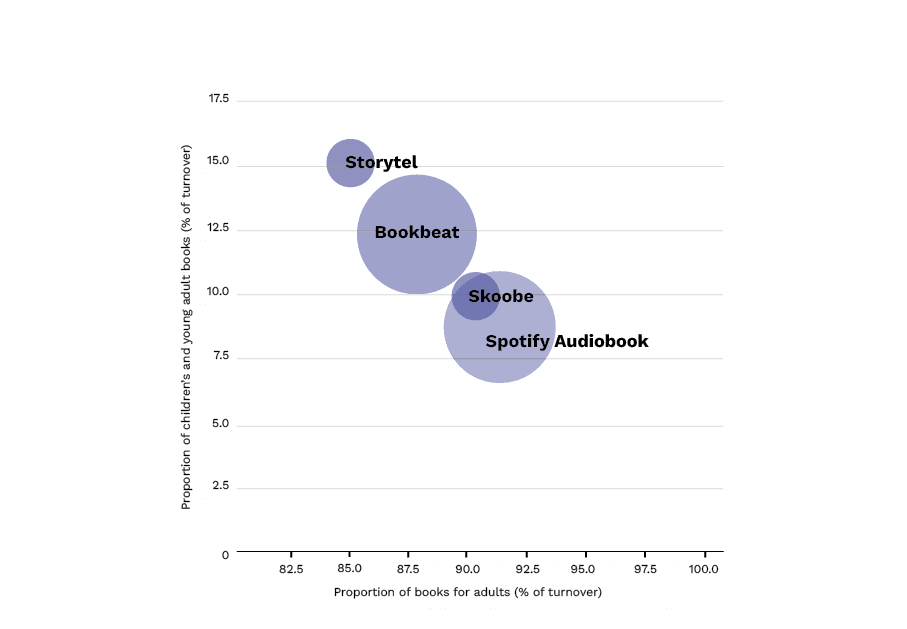
The data shows that Storytel is used by a younger audience compared to other providers. The response to the ad should therefore be particularly high there. For campaign management, the first decision to be made is whether the campaign should be sales- or reach-oriented. For reach-oriented campaigns, the number of expected streams can be calculated either on the basis of conversion rates from historical campaign data or on the basis of model assumptions. For sales forecasts, it is necessary to know the shop-specific sales per stream. Ultimately, the data helps in deciding for or against a campaign on Storytel.
Summary: Data-driven publishing as a cycle
As the examples show, the data-driven publishing process is a cycle and not a sprint. Each phase in the product cycle provides data and experience that, on the one hand, has a concrete impact on the next phase, but on the other hand can also change the entire cycle. This means that data-driven publishing is more than a project; at its core, it is an attitude! Less gut feeling and individual opinions, more systematic analysis, hypotheses, testing, measurement, and ongoing adjustments to decisions. It is important to emphasize that this is not about replacing creativity, but rather about optimally supporting and securing it.
For DDP to succeed, some preparatory work is required: data must be collected consistently, stored in a structured manner, and evaluated critically. The targeted use of specialized tools and the establishment of data-savvy teams can help here. The increasing use of AI in "home use" creates numerous opportunities for rapid data analysis, but also runs the risk of getting lost at the level of individual analyses instead of being part of an iterative overall strategy. Only when data-driven publishing is implemented integrally as a cycle does every publishing process result not only in a better book, but ultimately also in a better business model.

Where am I?
Check out the pictures our colleagues took all over the world and guess which photo belongs to which book fair.

♦ Readmagine (Madrid)

♦ Contec Chile

♦ London Book Fair