


"We Have Been Pursuing a very successful Diversification Strategy for Years"
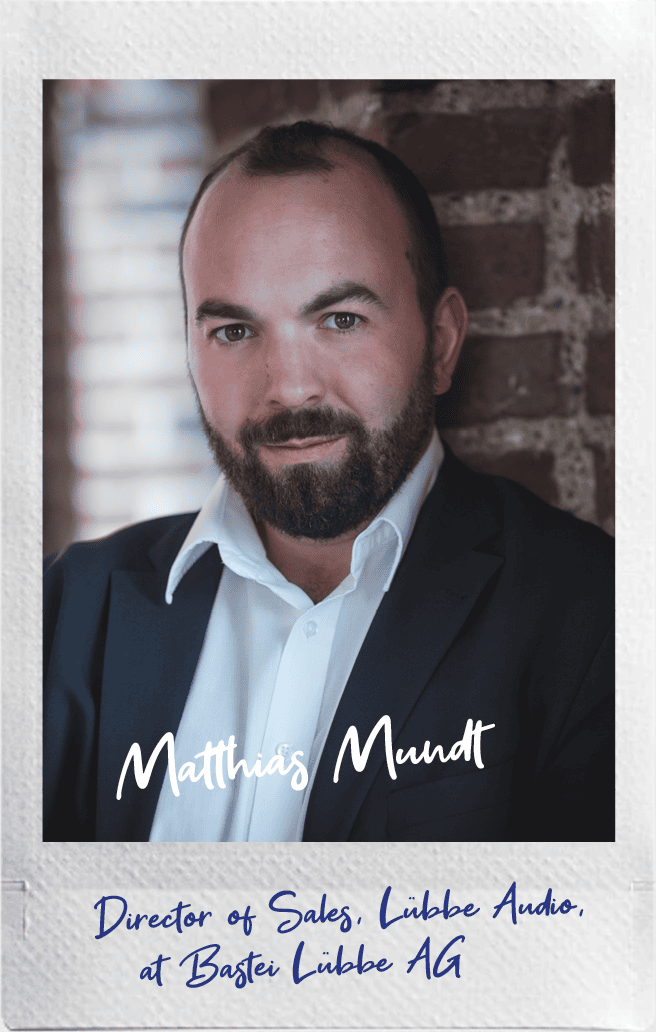
Matthias Mundt is Director of Sales at Lübbe Audio, part of Bastei Lübbe AG. Previously, as Sales and Program Manager, he was responsible for developing the digital strategy, establishing the digital program and the LYX.audio label, and internationalizing the audiobook segment.
Today, a hit audiobook doesn't need a passport – but it does need the right doors. How can a medium-sized provider establish a reach beyond the German-speaking market without jeopardizing established licensing relationships? Matthias Mundt from Lübbe Audio outlines how series, distribution partners, and platform logic interact, which factors are important in terms of rights, production, and metadata – and where technology can help, but should not take the lead.The DIGITAL PUBLISHING REPORT devotes several articles to internationalization in publishing strategies.
For decades, publishers have worked on sustainable licensing relationships in order to market their content in all language areas. Why does it make sense to jeopardize these relationships?
That would be anything but sensible. There is no substitute for a strong local licensing partner – especially in print. Our strategy here has always been two-pronged. While we are continuously expanding our network of licensees, our international program has been growing steadily for more than a decade and has long accounted for a significant share of our sales. The two approaches can be mutually beneficial: our "Cherringham" series, for example, was initially a sales success in English. This made the material interesting for other markets, and we have now sold additional translation licenses in six countries.
It is often said that internationalization is the supreme discipline for medium-sized companies. Why do you feel so well equipped for this supreme discipline that you are now also tackling the Spanish-speaking market?
Second, we have first-class relationships with all relevant trading partners in the digital sector. The audiobook market is often dominated internationally by the same major players. So the paths here are actually short. And with Zebralution, we have a very well-positioned distribution channel whose expertise we can draw on here.
What criteria do you use to decide which titles from your catalog have the potential for success in which language markets?
Similar to the German-language program, we continuously scan the marketplaces and see what is currently working well and where there are gaps in the offering. When it comes to titles that we translate, we benefit from the fact that we already have experience with them in other markets.How do you secure worldwide rights before global competitors strategically block your access to promising material?
Especially with our series, the ideas and concepts often originate directly in the publishing house. We work very closely with the authors to ensure that the content is perfectly tailored to our audience and our distribution channels. The international strategy is usually considered right from the start.Of course, this is much more difficult with international authors. But here, too, we rely on strong relationships and first-class, tailor-made service, which we as an agile medium-sized company can often offer more readily than a global corporation.
What role do AI translations, AI voices, voice cloning, and similar production-supporting AI tools play in your internationalization strategy?
Of course, we are looking into all the possibilities offered by technological developments – also with a view to international markets. For us, however, human creativity always comes first. Technology should support people, not replace them. We are not currently planning any releases in the field of synthetic voices.How will you ensure high-quality results for decentralized or foreign-language productions worldwide?
Of course, this is only possible with the appropriate expertise on site. We only work with established studios and voice actors in all markets. Our productions with prominent voice actors such as Neil Dudgeon (Inspector Barnaby) show that we maintain our high standards internationally.How do you ensure the quality and suitability of your metadata so that your program is visible in the algorithms of global platforms?
Here, too, it is invaluable to work with an internationally experienced partner such as Zebralution. The increasing standardization of requirements on major platforms also helps in this regard.How do you attract committed international trading partners for content that has little brand awareness in their language areas?
Our content is attractive to many retail partners because it stands out from most of the competition in terms of length, price point, and quality. The serial narrative style also helps us gain loyal, long-term customers for the platforms.Of course, this is easier with platforms with which we also work closely in our core market.
How do you ensure an adequate margin given the power of global platforms on whose reach you depend?
We have been pursuing a very successful diversification strategy for years. By consistently tapping into new marketplaces, we have not only been able to massively increase our sales in recent years, but also distribute them across many different partners. The entire industry benefits from this balanced market environment.What technical bottlenecks are currently hindering the smooth delivery of your digital programs to different language regions?
Fortunately, we designed our technical systems for an international structure years ago, so we can actually deliver very smoothly to the various territories. Similar standards in audio production also facilitate collaboration. The big challenge remains on the content side, finding the right material for each market and community.
We've descibed three great audio book titles with emojis and a bit of tongue in cheek. Can you figure out which books we're talking about?
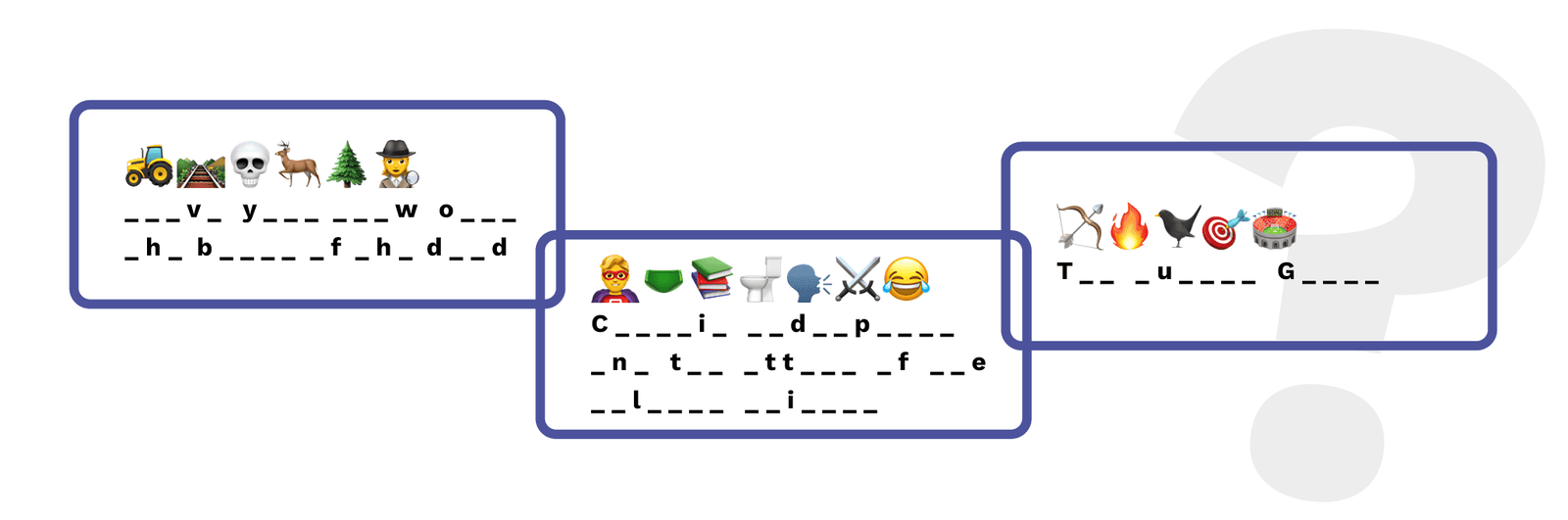
We're sure you’ve worked it out quickly. Highlight the text behind the icons to see the answer.
🚜 Drive Your Plow Over the Bones of the Dead (Olga Tokarczuk)
🦸♂️ Captain Underpants and the Attack of the Talking Toilets(Dave Pilkey)
🏹 The Hunger Games (Suzanne Collins)
Another focus is on the topic of author branding and publisher relationships: Sebastian Fitzek explains why he relies on his publisher despite having his own team. He also discusses his involvement with the audiobook and e-book publisher Parkum.
Finally, the question arises as to how long the statement “This book was written without artificial intelligence” will continue to serve as a mark of quality.
Welcome, Annika and Sebastian. Our podcast is called Ignite Publishing—and in a way, it’s all about that first spark. You’ve written a book together that focuses on sleep, but it also blends horror with thriller elements. What first sparked the collaboration? Annika, when did it “ignite” you
Annika: My spark moment was definitely realising that I’m actually allowed to write horror. It’s a genre that, unfortunately, isn’t very widespread in Germany. In film, a lot has happened in recent years – thanks to streaming services, horror has become more visible again, especially German horror. And that needs to happen in the book world too. That’s what we’re aiming for: to bring the horror thriller into the mainstream, to expand the horror section in bookstores so that it features not only titles from abroad but also from Germany. That’s what makes my dark heart beat faster.
Genre Traditions and the Repositioning of the German Horror Market
Sebastian, do you feel that way too – more horror in bookstores?
Sebastian: For me, it goes back to an idea from a long time ago. In 2013, if I’m not mistaken, “Der Nachtwandler” came out, and I had written a half-sentence in which the protagonist reflects on what it would be like if you could watch your dreams the next day – on TV, on your phone or on a pair of glasses. That was the moment when I thought: That’s actually a good idea. I’d love to watch my dreams – after all, you forget most of them once you wake up. But what if that weren’t such a good idea? What if it unleashed something horrific? That was a “what if” question that’s been on my mind ever since.
Annika, you come from the film industry and have been part of around forty film productions – and have died more than ten times in the process.
Annika: Yes, but quite often I was just tortured. Sometimes I get that mixed up myself. I think I’ve actually died twelve times. The thirteenth time would have to be something special.
What else motivated you to switch from film to books?
Annika: Actually, film is what got me into writing. I always wanted to be an actress; I landed my first role in a low-budget horror film and I never really got out of it. It was fun too. But in those low-budget productions, while the ideas were often strong, the storytelling and character development increasingly bothered me.
But as we all know, complaining is easy; doing it better is the real challenge. So I started co-writing screenplays, refining them and eventually wrote my own screenplay. That’s how I started writing and realised I really enjoyed it. Eventually, I wrote my first novel, which was already a mix of thriller and horror back then. But publishers weren’t ready for it at the time. So I ended up writing a full-fledged psychological thriller – thrillers have really taken off in Germany since Sebastian came onto the scene. And it worked right away. But my heart beats for horror. That’s why I’m so grateful that I now get to do horror together with Sebastian.Do you have any idea why horror in books struggles so much in Germany – even though it’s very successful here in the film and TV series sector?
Sebastian: I think that also has to do with what kind of experience you have and what you’ve tried. In the crime and suspense genres, we’ve long let the Americans, the British and later the Scandinavians take the lead, thereby reinforcing the prejudice that we Germans can’t do it. We’ve had to fight against that for a long time. By the way, streaming services have contributed a great deal to the fact that we no longer have to hide; the “Berlin Thriller,” for example, is currently causing a stir worldwide. When it comes to horror, we’ve also left the field to masters like Stephen King – we simply don’t have a strong tradition in this area. But you have to try out an incredible number of things over and over again. We now have an idea we like, we’ve brought it to life and now we’re curious to see what happens.
Conceptual Authorship and Strategic Genre Choice
Sebastian, this isn’t your first writing collaboration. There’s also the “Auris” series, where you developed the idea and Vincent Kliesch wrote it. What kind of self-image of authorship lies behind that?
Sebastian: I actually rarely reflect on myself as an author because I always start with the story, with the idea. I don’t care at all whether an idea fits my brand as an author or not; if something fascinates me so much that I want to spend a year of my life on it, then: Go for it. That could be a comedy like “Der erste letzte Tag,” “Elternabend” or “Horror Date.”
With Auris, it went like this: I had an idea: a phonetic investigator who can analyse voices and tell from a voice whether someone is depressed. That’s perfect for a radio play. Then Vincent said he’d like to write a book about it, and of course I said: sure. I wouldn’t have had time to write the book myself. With horror, I knew that while I enjoy reading and watching it, I don’t feel quite confident enough to write it. I thought I’d probably never bring this idea with the dreams to life. Then I met Annika and thought: This is a perfect fit. Otherwise, this idea would never have seen the light of day. I don’t see myself as an author, but as a storyteller – and for me, the story is always at the centre.
But you base that on the idea, not on a strategy. In the US, there are real writing factories – James Patterson and so on. Isn’t that a strategic move?
Sebastian: No. It would be presumptuous to think you could just step into a genre and conquer it overnight. And hardly anyone at the publishers is looking for horror anyway. If that were the strategy, we probably would have written a New Romance or Dark Romance instead – something so hot right now that entire trade-fair halls are being opened for it. But we haven’t had the idea for that yet.
On the topic of marketing: The website for your book doesn’t start with a cookie banner, but with a warning about strobe effects – almost like going to the movies. There’s a trailer, a social media campaign, merchandise, a giveaway. Is the book just one part of a larger creative universe – or the most important part?
Annika: Of course, the book is the most important thing for now. While writing, the focus was exclusively on the story; everything else was put on the back burner. I think merchandise and all that stuff comes out of the story itself. Once the book is finished, you automatically get creative again and think: How cool are the motifs we have in the book, and how can we bring them to life further? Personally, I like connecting with a motif visually as well, whether it’s a T-shirt or a bag. My mom, for example, crocheted me a Demogorgon from “Stranger Things”—things like that are nice too, right? That’s a process that emerges afterward, especially in a very visual genre like horror.
Sebastian, is that a different kind of marketing for a book like this?
Sebastian: For me, the story is the main focus here too. At some point, I asked myself: Why should my storytelling take place exclusively between the book’s covers? I use every opportunity to tell a story. A reading, for example, is essentially a promotional and sales event for the book, but who’s going to pay for it if they’re not getting anything extra out of it? That’s why we’re doing the “deepest reading in the world” – 700 metres underground. If we make a trailer, then please make one that’s never been done before. For me, the book is like a nail I have to hammer into the wall; it has to be driven in deep and stay put. Then you can hang a picture on it, and then others will come and make an ever larger picture out of it. But it all starts with the book. Whether it can be adapted into a film or not – I don’t care about that at all while I’m writing.
Sebastian, you have a strong author brand, very successful books and a wide reach on social media – that naturally helps compared to other authors who also have a good story.
Sebastian: Yeah, it’s a bit of a chicken-and-egg problem. My very first book came out in 2006 with a print run of 2,500 copies and zero euros spent on marketing. No autograph cards, not a single reading, nothing. It was trial and error with a tiny print run – basically doomed to fail. For my second book, I threw a big launch party. At the first reading for “Amokspiel” – which was number 15 on the bestseller list at the time – five people showed up, and three of them worked at the bookstore.
But word got around that I don’t do ordinary readings. The people who wanted to be entertained came, and they were the majority. Word spread so far and wide that last year 160,000 people attended my Arena Tour. You have to have staying power. It took ten years before I had my first number-one bestseller. In the book business, it’s always a marathon and never a sprint.Multimedia Marketing Synergies and the Relevance of Traditional Distribution Structures
But that also requires having a publisher who is open-minded and willing to learn from you. I recently spoke with an influencer who received a book offer from a renowned German publisher and asked what their social media strategy looked like – and got no answer. He ended up publishing the book himself. You mentioned on the OMR podcast that you’ve essentially built something like a co-publishing house – your own team, management, PR, social media and graphic design. Why do you still need a publisher for the project?
Sebastian:
I’m a big believer in division of labour. Authors shouldn’t be T-shirt sellers or book printers; they should focus on what they do best: telling stories.A publisher is almost indispensable for a book’s success. Take distribution alone: it’s simply impossible for a self-publisher to get their books in significant quantities into train station bookstores, petrol stations and supermarkets. As an influencer, by the way, I would have asked the publisher about the distribution strategy – almost more important than the social media strategy. Selling e-books online yourself might work, but I’m not a salesperson and I don’t enjoy it either. I also love working with my editor.
Annika, what does editing mean to you?
Annika: That alone is so valuable. I published my debut thriller, *Nachtfahrt*, in 2024 and had absolutely no publishing experience before that. It was important to me to work with professionals who know exactly what they’re doing. That’s why my first step was to go to a literary agency. And even though the two of us worked on the story together, at some point you get so caught up in your own story that you need a professional outside perspective to recognise: “This part doesn’t make sense,” or “There are repetitions here.” Only then do you end up with a truly polished manuscript.
You could also just pay for editing services. Matthias Matting, one of the most successful self-publishers who releases a new novel every eight weeks, occasionally collaborates with a publisher, specifically to get into brick-and-mortar bookstores. Sebastian, you’re now also a partner at the audiobook and e-book publisher Parkum, alongside your literary agent Roman Hocke and the former head of Audible Germany. Is that the first step toward becoming a publisher?
Sebastian: Quite simply: Michael Treutler is a very good friend of mine, and I think incredibly highly of him. I owe part of my career to him. When he championed my first audiobook in 2006 and secured Simon Jäger as the narrator, it reached number one on Audible. When he said he wanted to go independent, it was a no-brainer for me to support him. And his approach convinced me: producing an audiobook and releasing it simultaneously in English and Spanish – that’s really only possible if you’re in control of it yourself. Normally, an audiobook isn’t released in different languages at the same time. So I support him – but he does the bulk of the work.
That’s also exciting because publishers often can’t manage internationalisation – the rights structure is very complicated.
Sebastian: Exactly. Why would a German publisher want to produce outside the DACH region? I think this is a very good approach to giving other authors the broadest possible platform. But fortunately, I can focus on the stories; I do have to attend shareholder meetings, but that’s about as far as it goes.
Technological Disruption and the Validity of Human Creativity
When it comes to internationalisation in the audiobook sector, people quickly think of the use of synthetic voices. In the book, the endpaper reads: “Author’s Guarantee: This book was written without artificial intelligence.” How much longer will that still be seen as a mark of quality
Annika: I hope it will remain a mark of quality for a long time to come, and I think you’ll be able to tell the difference in the writing. There are already some people who use AI to churn out self-published titles every week. But I’m absolutely convinced that you can tell the difference. And it’s kind of sad, too: If you want to write, the writing process itself is exactly what you want to do. It’s like if you want to be an actor, you want to perform the role yourself. For me, that’s incompatible with AI.
I find it difficult to distinguish where the use of AI begins and ends. Is the spell check in Word already AI? So do you mean the ban applies to the writing process?
Annika: Yes, to the writing process. When it comes to initial research, I don’t find AI fundamentally problematic, though you still have to double-check things carefully because not everything is always correct. But when it comes to creativity and the rest of the process, that’s a no-go for me.
I imagine you could licence your favourite audiobook narrator – or buy ideas from you and have an AI put them into words. Would that be interesting because it’s less work – or would it spoil the fun of writing?
Sebastian: I think that need is overestimated. In the nineties, interactive TV was touted – you could choose the ending, vote on how the story continues. Netflix has now discontinued its latest attempt at this because the majority of people want to be served a good story. They don’t feel like working in their free time too. And people want to communicate about something. No one would say, “I’m going to watch the World Cup final in two weeks and generate an alternative ending for myself.” We let something be presented to us, and the next day we meet up with people and discuss it. That’s going to become increasingly important.
Annika: I imagine that would be difficult too. We brainstormed a lot at the beginning, building our framework. But when writing, a momentum of its own develops; sometimes characters do things I didn’t even know myself beforehand. They come to life and go their own way. Or you get to a point and think: Something else would actually be better here. That process is the actual writing.
Sebastian: It could be that an AI-generated text, based on objective criteria – which are rare in art – actually goes over better. But I believe that an AI-generated text is simply worthless in the eyes and ears of people as soon as it’s classified as such. If something costs nothing, people tend to think it’s worth nothing. Artistic achievement always stands or falls with the person behind it. The author’s brand becomes more important, but generally the person becomes more important. In tennis, Boris Becker, Steffi Graf or John McEnroe weren’t necessarily technically better than everyone else. But they were personalities. I need to see someone sweating it out on Centre Court. And then it doesn’t matter if someone else plays just as well – they have to have personality too.
Last question: You’re experts at building suspense. What still gives you the creeps?
Annika: Actually, everything gives me the creeps. I’m a worst-case-scenario thinker. I always stick to the rules because I really think: If something happens to me now, it’s my own fault. If someone tells me, “Don’t go that way, it’s dangerous,” then I definitely won’t go there. Instead, I think about what might be waiting for me there. I’m actually afraid of a lot of things.
Sebastian: If you don’t feel fear yourself, you can’t really make that spark jump to someone else – whether it’s positive or negative. For me, unexplained noises in the dark are enough. I live in an old house where things are always creaking and banging somewhere. And when I know I’m all alone and suddenly hear the toilet flushing above me – that’s a classic example – I say, “That’s enough.” Then I go check to see if maybe someone is sitting on the toilet after all
The interview was conducted by Albrecht Mangler and Daniel Lenz.
Photos: Audible/Thomas Bayerlein